Fixtures / Manual fixtures
Manual and dedicated fixtures
The most under-specified fixture in a machine shop is the one that works. A manual dedicated fixture costs a third of a hydraulic one, needs no power unit, and fails in a way an operator notices immediately.
At a glance
What it is: a plate or angle fixture with hand clamps, straps or a manual over-centre toggle, locating on a machined datum, bolted to a sub-plate or directly to the table.
Price band: USD 1,200–3,500 FOB China for a dedicated manual fixture; USD 300–900 for soft jaws and a sub-plate, which is often all a job needs.
Lead time: 3–6 weeks from approved drawing — the shortest of any fixture type, because there is no circuit to design and nothing to prove out beyond the trial cut.
Best fit: low volume, high mix, prototype-to-500-off runs, and any cell where an operator is at the machine anyway.
If the operator is standing there, a manual clamp that takes four seconds is cheaper than a hydraulic system that saves three of them and costs eight thousand dollars.
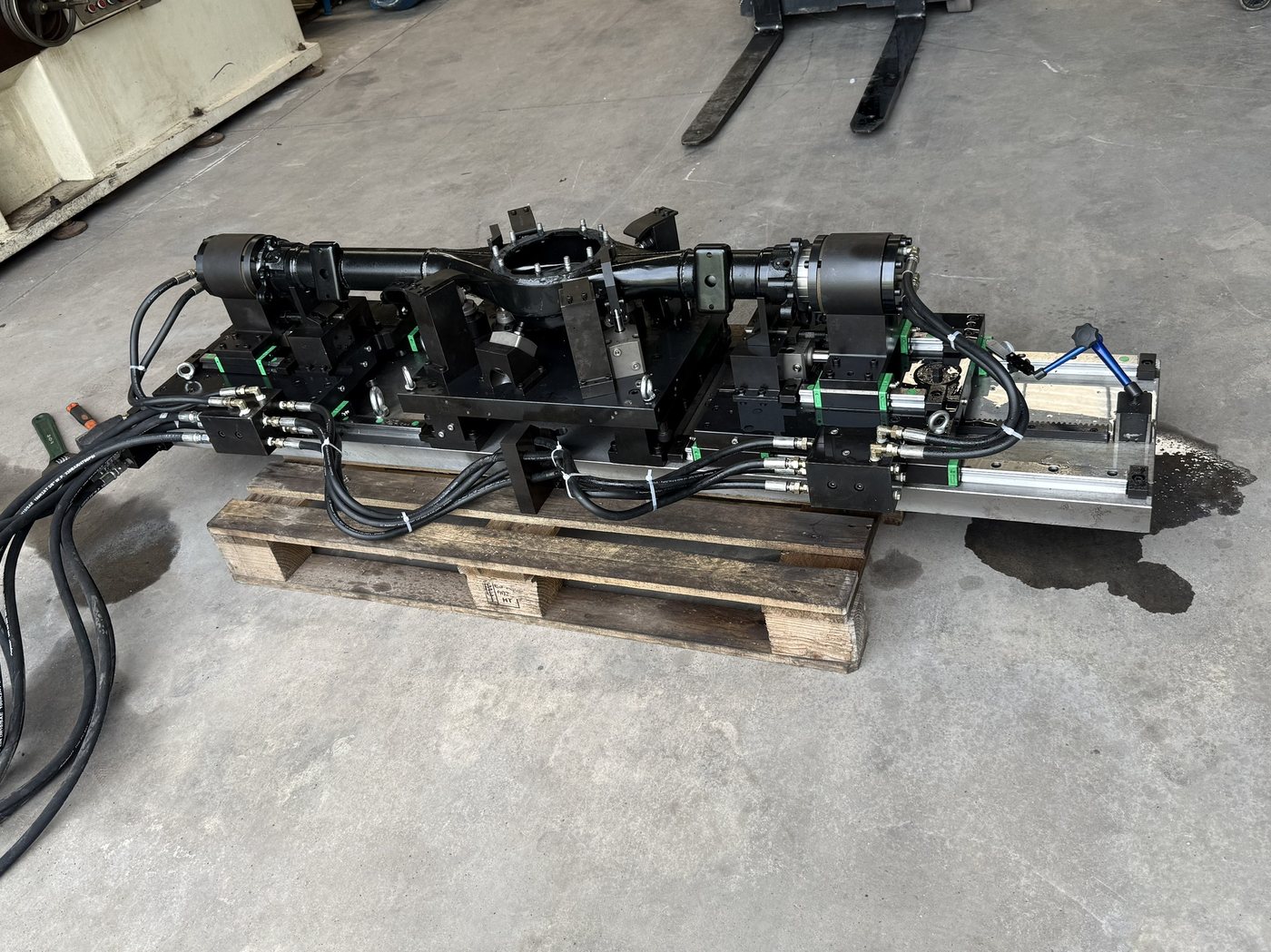
What can be specified
| Item | Range |
|---|---|
| Clamping | Hand clamp, strap clamp, over-centre toggle, or manual wedge |
| Location | Machined pads plus pins; hardened wear surfaces on anything that repeats |
| Base | Sub-plate for repeatable re-mounting, or direct to table for one-off work |
| Material | S45C or equivalent plate, stress-relieved before finish machining |
| Tolerance | Typically 0.02–0.05 mm location repeatability; tighter needs jig-bored location |
| Stations | 1 to 4 per plate; more than that and handling time dominates |
| Changeover | Sub-plate with a dowel and bolt pattern, typically 5–15 min |
| Delivery package | Drawings, BOM, setup sheet, trial-cut report |
Figures marked “typical” are the values this class of fixture normally holds in production. Actual values are fixed on the drawing, not on this page.
Why these are still the right answer
Three reasons, none of them about cost.
Failure is visible. A manual clamp that was not tightened is obvious to the operator and to anyone watching the machine. A hydraulic clamp that lost pressure looks exactly like one that has not.
There is nothing to maintain. No seals, no power unit, no pressure switches, no accumulator to re-charge. On a fixture that runs twice a month, that matters more than cycle time.
It can be modified on a Saturday. A manual fixture can be re-drilled, shimmed or re-pinned by the toolroom. A hydraulic fixture cannot.
The trade is honest: you pay in operator time and you get back in capital, maintenance and diagnosability.
Where the money actually goes
In a manual fixture the cost is not the steel. It is:
- Datum design — deciding what the part sits on and what it is pushed against. This is the same work as on a hydraulic fixture and it is the majority of the engineering.
- Hardening and grinding the locating surfaces, so the fixture still holds tolerance after 5,000 cycles.
- The trial cut — proving the clamp order and the support before the drawing is closed.
A quote that undercuts by half is usually a quote that skipped one of those three.
What this is not for
- Not for unattended running. There is no confirmation to wire, because there is nothing to confirm.
- Not for heavy roughing with long overhangs. Hand clamps relax under vibration and the operator will not hear it over the cut.
- Not for high-volume repetitive work. Above a few thousand parts the operator time dominates the fixture cost.
Send a drawing. Get a clamping scheme and a price band.
What speeds this up: the workpiece drawing (STEP plus a PDF with datums and tolerances), the machine model, the operation sequence, the cycle time you are targeting, and the annual quantity. Without those you get a band; with them you get a number.